AI Automation · Prompt Engineering · n8n
Automated Brand Asset Pipeline
End-to-end AI automation system turning a plain-English campaign brief into 200+ platform-ready brand assets per day — with automated quality control, brand compliance scoring, and zero manual handoffs.







Project Overview
Core innovation
Expert design knowledge — composition, brand hierarchy, platform-specific aesthetics, emotional tone — systematically extracted, codified into weighted prompt parameters, and scaled through n8n workflow automation. The system eliminates routine design work; designers focus on creative direction.
The Business Challenge
Limited design capacity
Traditional design teams produce 10–15 assets per week, creating campaign bottlenecks and slow market response cycles.
Escalating cost per asset
$200–$500 per asset including designer time, revision cycles, and project management — prohibitive for large-scale campaigns.
Brand inconsistency at scale
Manual asset creation across multiple designers produces ~30% brand compliance issues — colour drift, typography violations, logo misuse.
2–3 week production cycles
Multi-round reviews and revision cycles prevent agile campaign iteration and response to real-time market opportunities.
Traditional workflow
- 2 weeks per campaign cycle
- 10–15 assets per week
- $400 average cost per asset
- 70% brand compliance rate
- 2.8 average revision cycles
Automated system
- 2 hours per campaign cycle
- 200+ assets per day
- $10 average cost per asset
- 95% brand compliance rate
- 0.2 average revision cycles
Pipeline Architecture
Input layer
Plain-English campaign brief
Marketing team provides campaign objectives, platform targets, and tone — no design knowledge required
Prompt engineering layer
Weighted parameter template system
Campaign brief transformed into structured prompts with numerical weights, conditional platform logic, and negative constraints
Generation layer
Multi-modal AI APIs in parallel
Google Gemini (images) · Google Veo 3 (8–15s videos) · GPT-4 Vision (analysis) · DALL-E 3 (supplemental)
Quality control layer
Automated brand compliance scoring
Iterative refinement loop — assets below threshold re-queued with corrective prompt injection, not passed to human review
Delivery layer
Automated storage and distribution
Google Drive organised folder structure · metadata tagging · platform-specific format export · stakeholder notification
Prompt Engineering Methodology
The system's output quality is a direct function of the prompt architecture. Generic AI prompts produce generic outputs. The methodology below transforms AI generation into a repeatable, brand-consistent production process.
Weighted Parameter System
Numerical element prioritisation (1.0 = normal, 1.5 = enhanced, 2.0 = maximum) controlling visual prominence
Design expertise is codified as numerical weights — the same way a senior designer communicates hierarchy ("make the logo more prominent, tone down the background"). The LLM interprets these weights to control relative visual emphasis.
Ensures brand elements are prominent without appearing forced or overlaid.
Optimises for audience emotional resonance and campaign message alignment.
Guides viewer attention through the composition toward the call-to-action.
Enforces brand colour consistency — highest weight because colour is the most visible brand signal.
{
  "critical_elements": {
    "brand_visibility":       "(logo_prominence:1.8)",
    "emotional_impact":       "(heartwarming_connection:1.7)",
    "visual_hierarchy":       "(clear_flow:1.6)",
    "color_dominance":        "(brand_palette:1.9)",
    "conversion_psychology":  "(urgency_triggers:1.4)"
  }
}Conditional Platform Style Logic
One brief generates 8+ platform-optimised variants automatically — Instagram, TikTok, print, billboard
Platform aesthetics differ significantly. An Instagram post, a TikTok video, and a large-format print poster require different visual languages even for the same campaign. Conditional logic selects the appropriate aesthetic bundle automatically.
IF: Social media campaign
APPLY:
  TikTok visual language    (1.8)
  Viral content mechanics   (1.7)
  Gen-Z aesthetics          (1.6)
  High-contrast neon        (1.8)
IF: Large-format print
APPLY:
  Cinematic composition     (1.8)
  Large-format optimisation (1.7)
  Atmospheric depth         (1.6)
Mystical realism (1.8)Three-Tier Negative Prompting Framework
Systematic exclusion of undesired outputs — technical, brand, and psychological constraints
Positive prompts guide AI toward desired outputs. Negative prompts enforce hard boundaries. Without them, even well-weighted positive prompts produce outputs with stock-photo aesthetics, off-brand colour drift, or emotionally misaligned tone.
Technical exclusions
- Pixelated or low-resolution output
- Amateur composition patterns
- Stock photo aesthetics
- Oversaturated filters
- Cluttered layouts
Brand exclusions
- Competing brand logos
- Off-brand colour palettes
- Unauthorised imagery
- Inconsistent typography
- Unapproved mascots or characters
Psychological exclusions
- Anxiety-inducing visual elements
- Negative emotional triggers
- Isolation or exclusion imagery
- Aggressive or confrontational tone
- Dark aesthetic inconsistent with brand
Seven-Phase Generation Sequence
Progressive refinement with validation gates — foundation first, conversion layer last
Generating a complete brand asset in a single prompt produces mediocre composition. The seven-phase sequence builds quality progressively — composition established before character placement, atmosphere before branding, branding before conversion elements.
Establish compositional framework — golden ratio alignment (1.8), visual flow dynamics (1.6).
Position brand mascot as heroic focal point (1.8) with character consistency enforcement (1.7).
Build atmospheric depth (1.6) with contextual scene elements and environmental authenticity (1.5).
Weave diverse human connection (1.7) with realistic interaction scenarios that resonate with the target audience (1.5).
Integrate brand elements seamlessly (1.9) while suppressing "forced logo placement" aesthetics (0.2).
Enhance emotional resonance (1.8) and reinforce the campaign's community pride messaging (1.6).
Strategically position call-to-action elements (1.7) with appropriate urgency psychology (1.5).
n8n Workflow Implementation
The prompt engineering methodology would be useless without the infrastructure to run it reliably at scale. The n8n workflow orchestration handles the full asset lifecycle — from campaign brief ingestion to stakeholder delivery.
Input processing
- Webhook receivers — external campaign request integration
- Google Sheets — campaign brief parsing and parameter extraction
- GitHub integration — prompt template version control
- Schedule triggers — batch processing for overnight runs
AI API coordination
- Google Gemini API — image generation with prompt injection
- Google Veo 3 API — 8–15 second promotional video clips
- Dynamic substitution — campaign parameters injected into templates
- Exponential backoff — retry logic on API timeouts or rate limits
Quality control loop
- Brand compliance check — automated scoring against style guidelines
- Threshold validation — assets below 90% score re-queued
- Iterative refinement — corrective prompt injection, not manual rework
- Human approval gate — final checkpoint before delivery
Storage & distribution
- Google Drive — organised folder hierarchy creation per campaign
- Automated naming — systematic file naming and metadata tagging
- Multi-format export — platform-specific dimensions and compression
- Stakeholder alerts — delivery notifications with asset summaries
Case Study: PETOKINGDOM App Launch
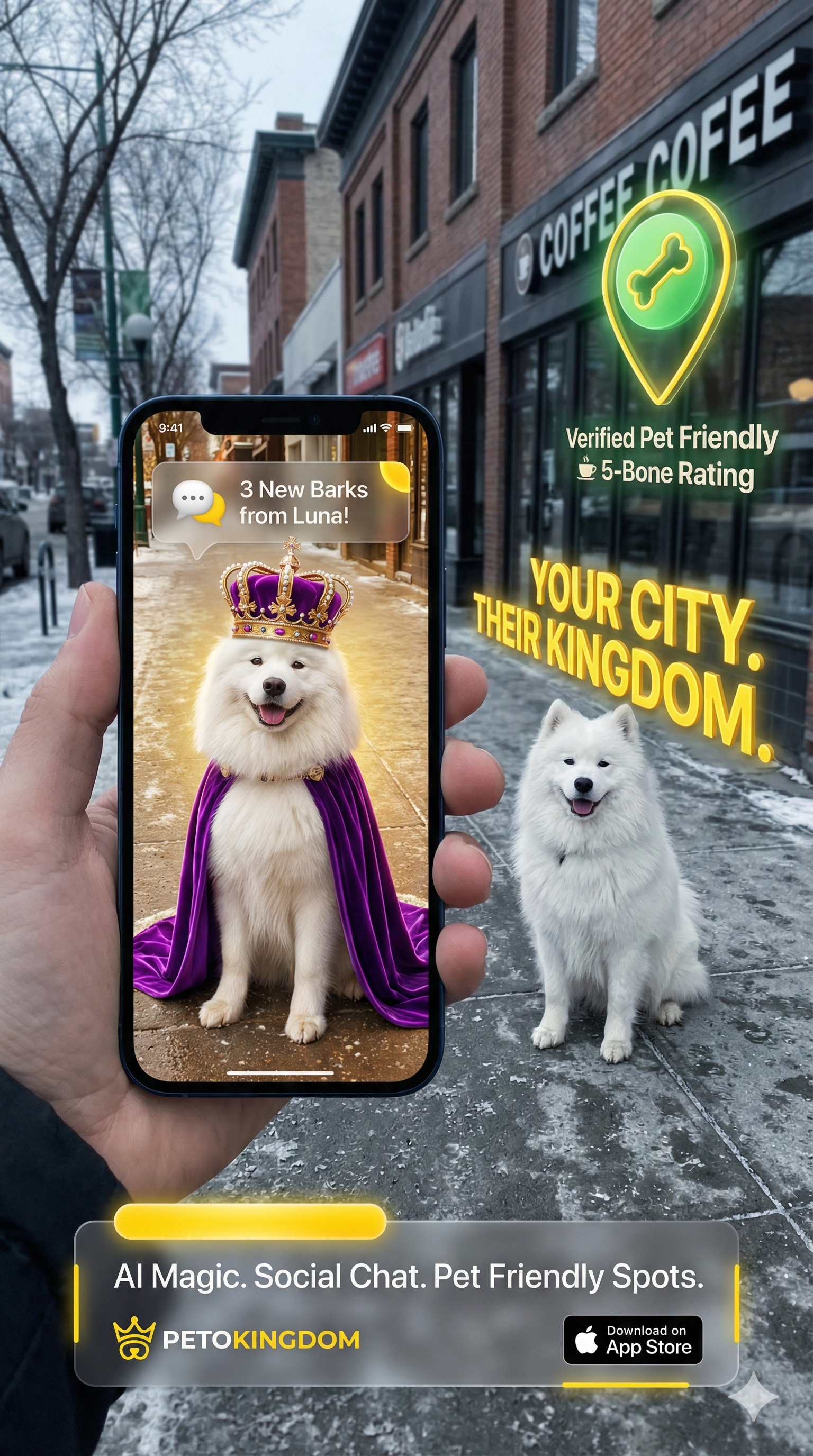
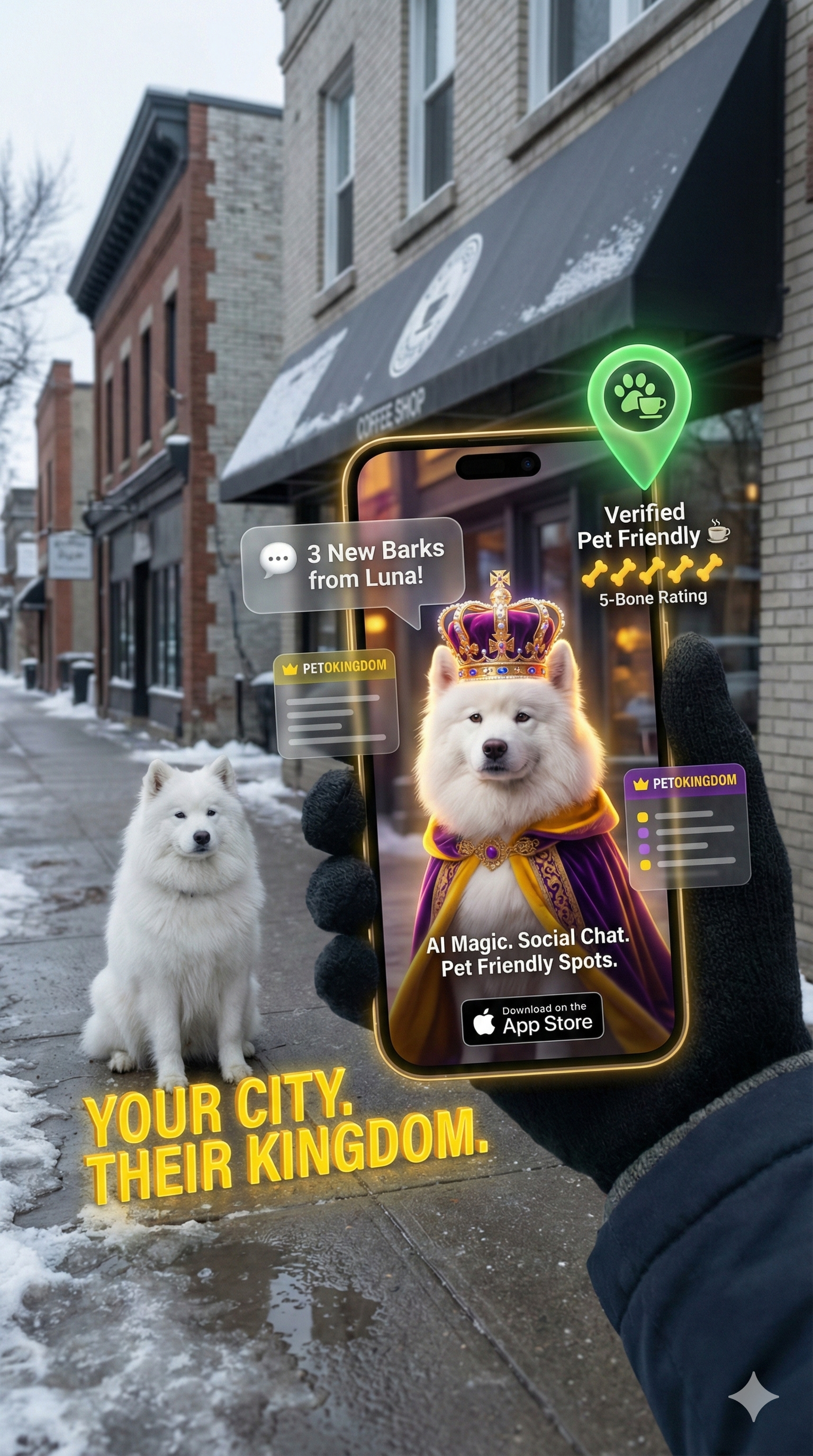
Challenge: Generate 50+ marketing assets for the PETOKINGDOM app launch across multiple campaigns and platforms, maintaining strict brand consistency around a yellow citrus bearded dragon mascot and Edmonton-specific visual identity.
Phase 1 — Brand system setup
- Yellow citrus bearded dragon character guidelines
- Colour palette enforcement (#FFD700 primary)
- Edmonton landmark integration rules
- Community safety messaging consistency
- Aurora borealis visual theme system
Phase 2 — Automated asset generation
- Instagram, Facebook, TikTok posts
- 8–15s promotional videos via Veo 3
- Event-specific marketing materials
- App store promotional graphics
- Large-format digital billboard designs
Phase 3 — Results
- 20 assets in 2 hours vs. 2 weeks manually
- 95% brand compliance on first pass
- $50 vs. $300 per asset cost
- 88% first-pass acceptance rate
- 0.2 revision cycles vs. 2.8 manual
Results & Business Impact
Traditional — 100 assets
Automated — 100 assets
Net savings: $43,850 per 100-asset campaign
Payback period: single campaign. Annual savings potential at scale: $350,000+
Technology Stack
Workflow orchestration
AI generation
Data & storage
Version control & templates
Engineering Learnings
Prompt engineering is software engineering
Systematic templates with version control, testing, and documentation are as critical as code. Weighted parameters and conditional logic transform generic AI into a brand-consistent production tool — this is engineering, not art direction.
Quality control requires automation
Human validation doesn't scale to 200+ assets per day. Automated compliance scoring with threshold-triggered refinement loops maintains quality without human bottlenecks — and produces more consistent results than manual review.
Multi-modal orchestration is complex
Coordinating text, image, and video generation across multiple APIs requires careful error handling, exponential backoff, and state management. n8n workflow automation proved essential — raw API calls were too brittle for production.
Cost optimisation through model selection
Using cheaper models for quality-check passes and premium models only for approved final generation reduced API costs by 40% while maintaining output quality. The validation loop itself is an engineering cost lever.
Brand consistency is systematisable
95% brand compliance — better than manual — is achievable by codifying design knowledge as weighted parameters and negative constraints. Expert design judgment can be extracted, versioned, and scaled.
Implementation Roadmap
Phase 1 — Foundation
- Core n8n pipeline development
- AI API integration and QC system
- Brand template library
- PETOKINGDOM campaign execution
- Performance measurement baseline
Phase 2 — Enhancement
- Analytics dashboard for campaign metrics
- ML-based prompt optimisation
- Multi-brand support for portfolios
- A/B testing framework for variants
- External API for third-party integrations
Phase 3 — Enterprise scale
- Global deployment with regional variants
- Industry-specific template library
- White-label solution for agencies
- AI model fine-tuning per brand
- Real-time collaborative editing UI